travel-guide / Suggestions
7 typical customs and traditions of the Holy Week
Discover 7 of the main traditions of Portuguese Easter
03/30/2026
Discover the Portuguese Easter customs that mark the North, Centre and South of the country, from processions, roasted lamb and Easter bread, to the unique traditions of the Holy Week. Get inspired for your holiday.

The tradition of godparents and godchildren
Easter is also known as godparents and godchildren day, one of the most cherished family traditions in Portugal. On Palm Sunday, it is customary for godchildren to give their godparents a bouquet of flowers or olive branches as a sign of respect and gratitude. On Easter Sunday, godparents return the gesture by offering Easter bread, symbolizing care, protection and the renewal of family bonds. This tradition remains very much alive in many regions of the country, especially in the North and Centre of Portugal, and is one of the most meaningful moments of Portuguese Easter traditions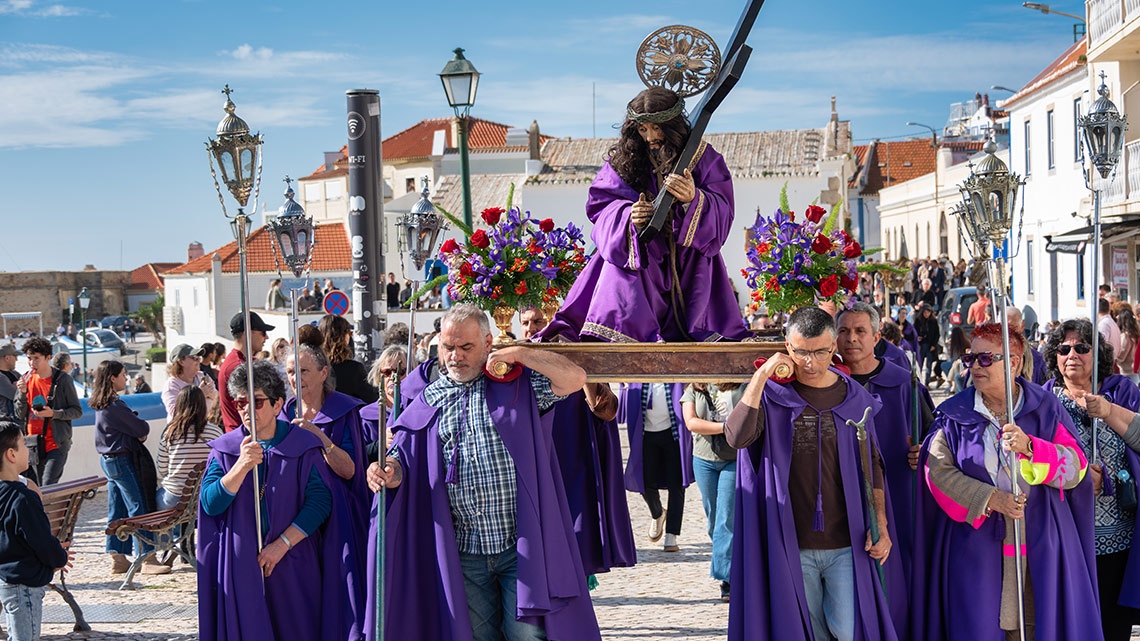
The Procession of the Lord
On Good Friday, solemn processions take place all over the country that recreate the Passion of Christ. These celebrations combine faith, tradition and cultural heritage, representing a highlight of Portuguese Easter traditions. In cities such as Braga, the celebrations are especially emblematic, attracting national and international visitors.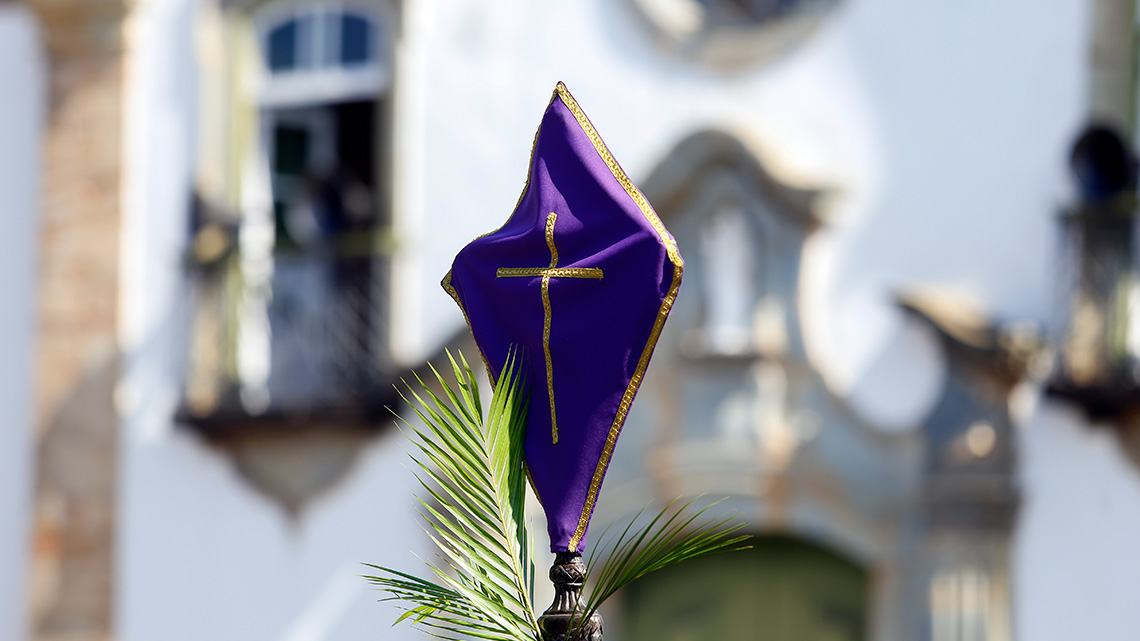
Compasso Pascal
One of the most characteristic Easter traditions in Portugal is the Compasso Pascal. On Easter Sunday, the priest visits parishioners’ homes to announce the resurrection of Christ and bless the families. Homes are decorated with flowers and embroidered towels to receive the Compasso, creating an atmosphere of celebration and renewal.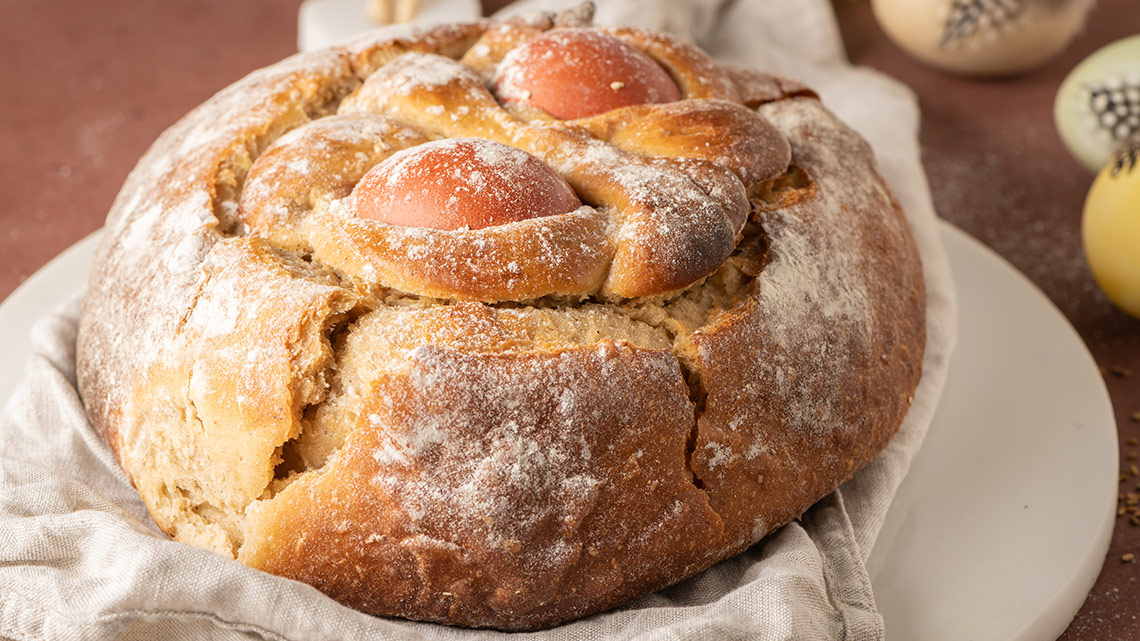
Easter bread
The Easter bread is one of the most iconic symbols of Portuguese Easter gastronomy and one of the most traditional products of the season. It can be sweet or savoury, depending on the region. In Chaves, for example, this bread is traditionally savoury, filled with ham, chorizo and other Portuguese sausages, making it a highly appreciated specialty from Trás-os-Montes. The sweet Easter bread, common in regions such as Coimbra, features a soft dough flavoured with cinnamon and aniseed, often decorated with whole boiled eggs, symbolizing renewal and life.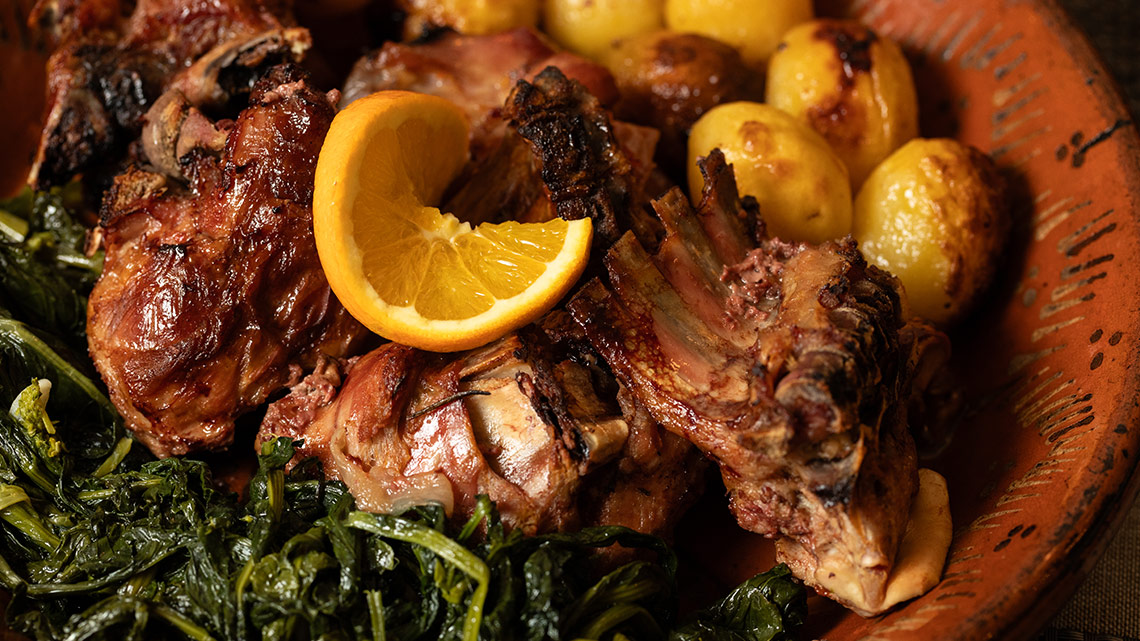
The roasted lamb
In many Portuguese families, the oven-roasted lamb is one of the typical dishes of Easter Sunday lunch. Slow-cooked, it is served with roasted potatoes and regional wine, bringing families together around the table in a celebration of tradition and togetherness. Portuguese traditional gastronomy takes centre stage at this time, making Easter also a privileged moment to discover authentic flavours during a getaway or longer stay.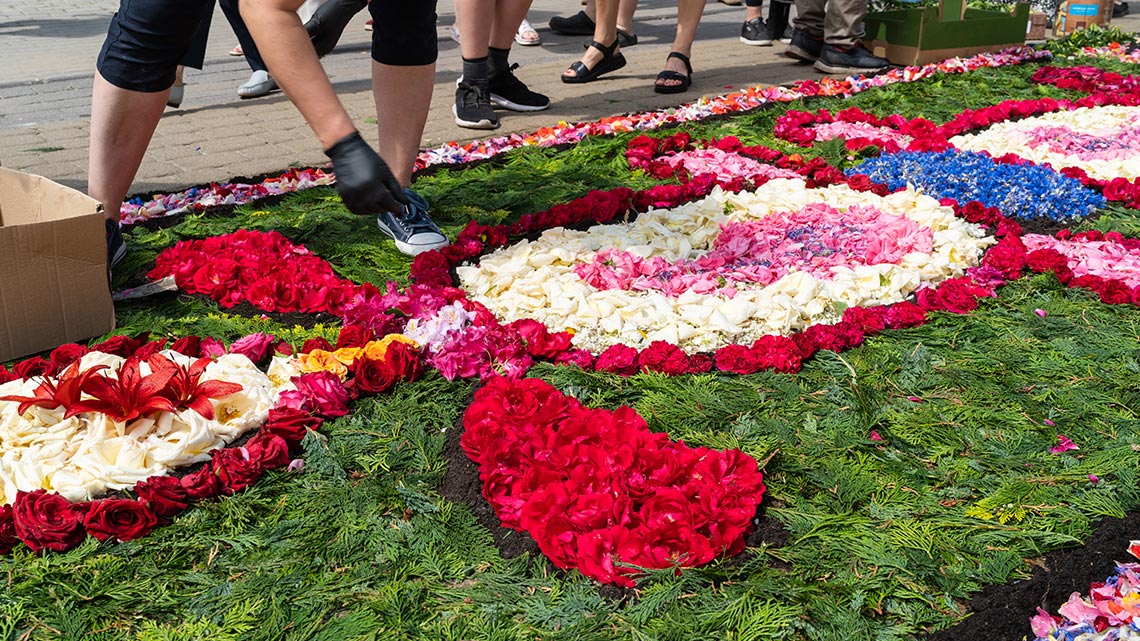
Flowery rugs
In some Portuguese villages, streets are decorated with rugs made of natural flowers for the Holy Week processions. This artistic and community tradition involves residents of all ages, transforming streets into true works of art.
Chocolate eggs
Although a more modern tradition with strong commercial influence, chocolate eggs have become a must during Portuguese Easter, especially among children. They represent renewal and life, symbols associated with the resurrection. During the Easter holidays in Portugal, many families also offer almonds and traditional sweets, keeping the festive and family spirit alive.Easter in Portugal is much more than a religious celebration. It’s a time of togetherness, tradition and cultural discovery. Among Holy Week processions, typical flavours, like Easter bread and roasted lamb, and family customs, like the godparents’ tradition, this is one of the most authentic times to visit the country. So, if you are planning your Easter holidays in Portugal, take the opportunity to experience these traditions up close and enjoy days of rest and tranquillity.
Discover our hotels